No traditional Japanese philosophy ignores the strict hierarchy of the five elements. However, their order varies according to the schools. Some disciplines prioritize emptiness, while others prioritize earth, disrupting the classical sense of balance. The codification of these elements has never prevented local adaptations or the emergence of unexpected variants in daily practice.
Differences in interpretation persist even among the most orthodox schools. Ritual practices, martial arts, and traditional medicine incorporate these elements according to sometimes contradictory logics. This system, far from being fixed, evolves with the needs and cultural contexts.
The five Japanese elements godai: origins and deep meaning
At the heart of Japanese culture, the five Japanese elements godai form an intellectual and sensitive matrix for understanding the world. The word godai, literally meaning “five greats,” highlights a tiered structure inherited from the encounter between Eastern religions and local traditions. From medieval Japan, the earliest treaties testify to this profound fusion: Buddhism, intertwined with Shintoism, shapes a new reading of matter and spirit.
The earth evokes stability, but on a volcanic archipelago subject to natural forces, water occupies a unique place: it nourishes and threatens at the same time. Fire carries within it the force of destruction and the power of purification. Wind embodies movement, mobility, and vital impulse. Finally, emptiness: this potential space, this reserve of transformation, allows the other elements to communicate and evolve. This framework of understanding is not confined to abstraction: it permeates architecture, martial arts, and everyday gestures.
Each spiritual or artistic current assigns a specific, sometimes debated, place to these five elements. The balance they outline is never fixed. To better understand this foundation of Japanese culture, one must explore the godai and their multiple roots, historical, philosophical, but also sensory, born from an intimate experience of the territory.
What do earth, water, fire, wind, and emptiness symbolize in Japanese culture?
Each of the five elements plays a specific role in the Japanese worldview. Here’s how they differ:
- Earth: It symbolizes grounding, the real, everything that constitutes the necessary foundation for life and society. In traditional buildings, the presence of solid wood or stone manifests this sought-after anchoring in the face of the unexpected.
- Water: Through its flexibility, it conveys the ability to adapt, to accompany forms without ever opposing them. Water rhythms Japanese gardens, shapes tea rituals, and flows through calligraphy. It embodies the cycle, life, and invites circulation.
- Fire: Energy in motion, fire is will, passion, but also the force that transforms, that transcends material boundaries. In festivals and rites, it purifies or destroys, but never leaves anything still.
- Wind: It is the freedom of gesture, the impulse, the inspiration that animates beings and landscapes. Invisible, it connects, transports, carries words and poetry.
- Emptiness: It is not a lack, but a space to be invested, a zone of transformation. It allows for breathing, creation, the circulation of energies, both in thought and in the organization of space. In Japanese tradition, it offers potential at every moment.
Concrete examples: how the godai inspire daily life in Japan
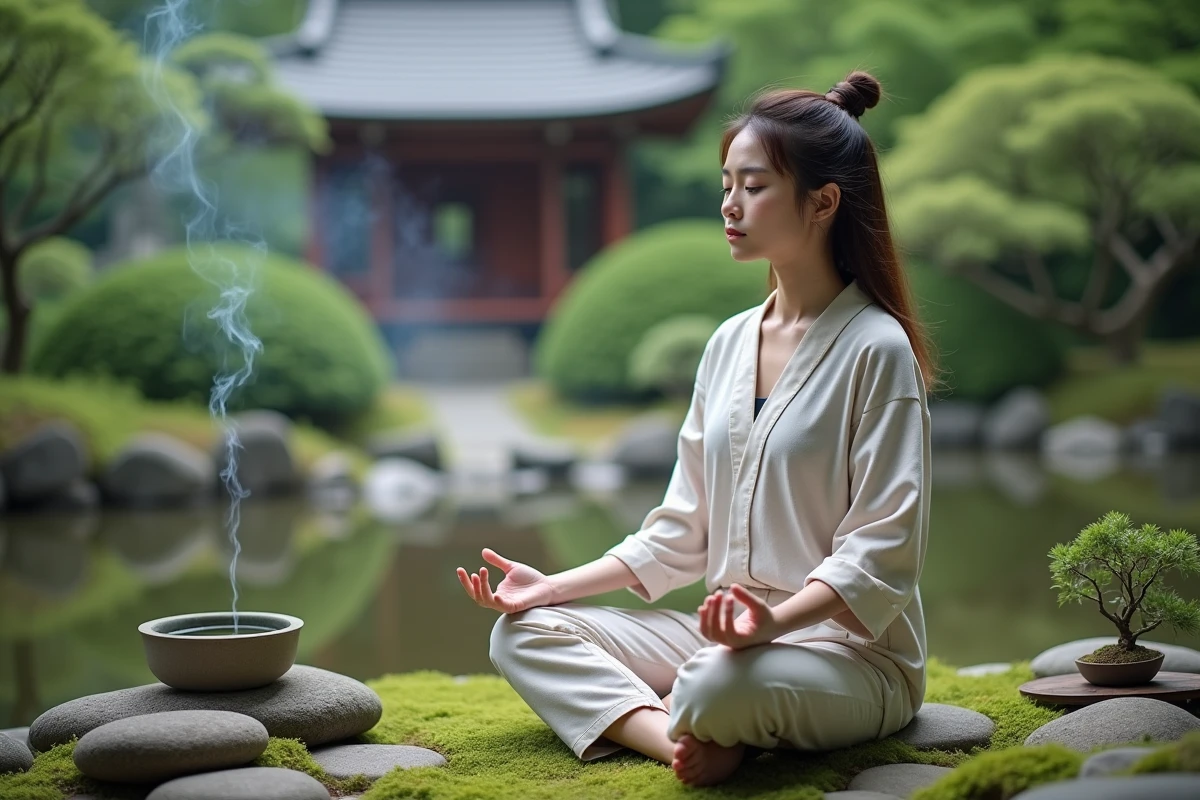
The five elements do not merely inhabit treaties or ancient rituals. Their presence manifests in many aspects of Japanese life. Take a garden in Hakone or Kyoto: each stone, each stream, each empty space expresses the desire to balance earth, water, and emptiness. The path’s layout, the silence between two trees, the regular flow of the stream: everything contributes to a harmony between the gaze, the body, and nature.
In martial arts, the structure of the godai shapes the gesture and mindset of the practitioner. Grounding to the earth recalls earth; the flexibility of movement evokes water; speed represents wind. The explosion of energy is fire; the openness to the moment, the availability, is the role of emptiness. This framework of understanding does not leave the dojo; it accompanies the individual in the street or in their daily life.
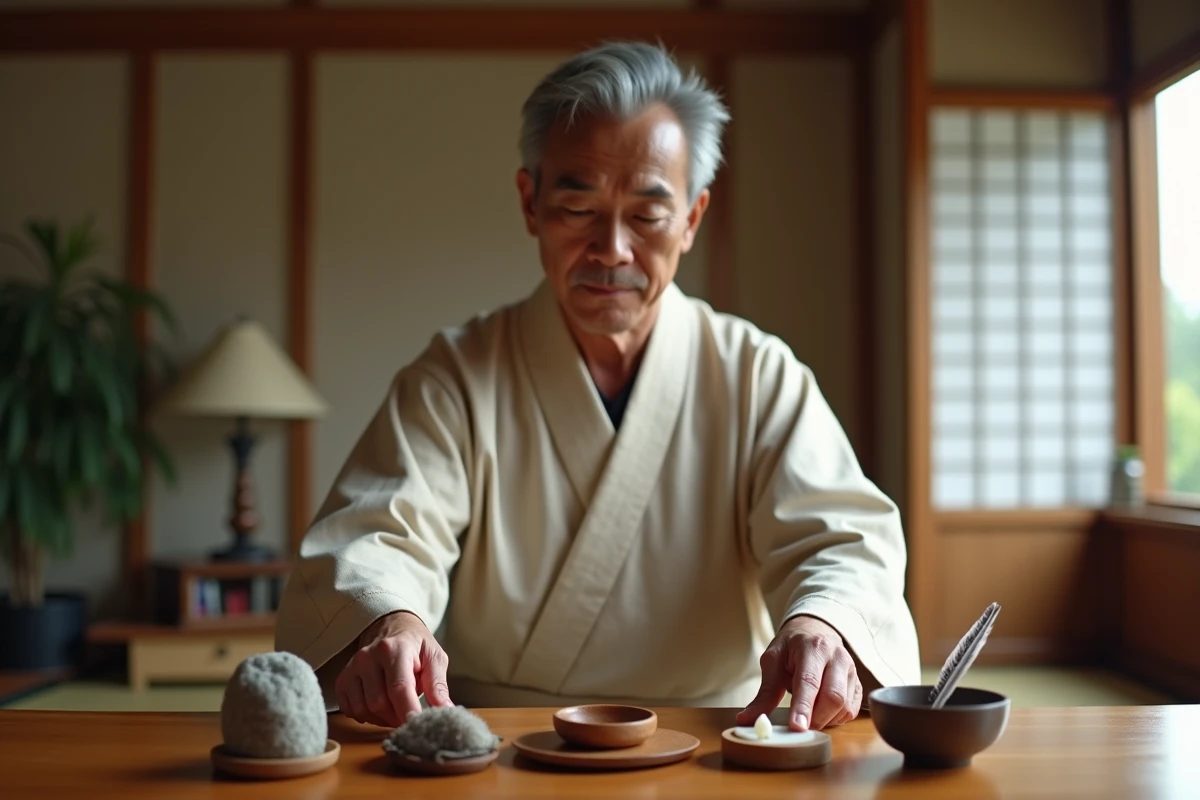
Another example is the tea ceremony. Here, everything is designed with the godai in mind: the choice of the bowl, the precise gesture, the quality of the water, the space given to silence and breathing. This constant dialogue with the elements shapes not only an art but a way of being in the world, where each season, each detail, becomes an opportunity to adjust one’s relationship to reality. The godai are not a relic of the past: they still nourish the imagination and practice today, offering a common thread between nature, culture, and daily life. The five elements, far from being a simple theory, continue to shape the very texture of Japanese life, and perhaps, through it, offer everyone a way to rethink their own harmony.