A corporate event in Switzerland is not just about booking a venue and a caterer. Designing a fun professional activity involves balancing three parameters: the game format, the group size, and the logistical constraints of the chosen location. This combination, often underestimated, determines the difference between a unifying moment and a half-day forgotten the following Monday.
Swiss regulatory constraints to consider before design
Since January 1, 2025, Swiss legislation has tightened the rules around sustainability claims. Labeling an event as “CO2 neutral” requires verifiable evidence: covered scope, measures taken, accessible documentation. A seminar presented as eco-friendly without factual basis exposes the organizer to legal risks.
This evolution changes the way to communicate both internally and externally. An outdoor team building event announced as “zero emissions” in a corporate newsletter must be able to justify this claim. The prudent approach is to describe concrete actions (group transport, local providers, absence of single-use plastics) rather than using self-proclaimed labels.
ETH Zurich has taken an additional step by replacing its voluntary travel reduction targets with an institutional framework that incorporates carbon costs into budget validation. This model directly inspires event planning: budget for participant transport should be treated as a separate line item, not as an optional expense.
Corporate game formats in Switzerland: choose according to the objective
Not all fun formats produce the same effect on a team. Before browsing an activity catalog, it is essential to distinguish three families of games based on their actual purpose.
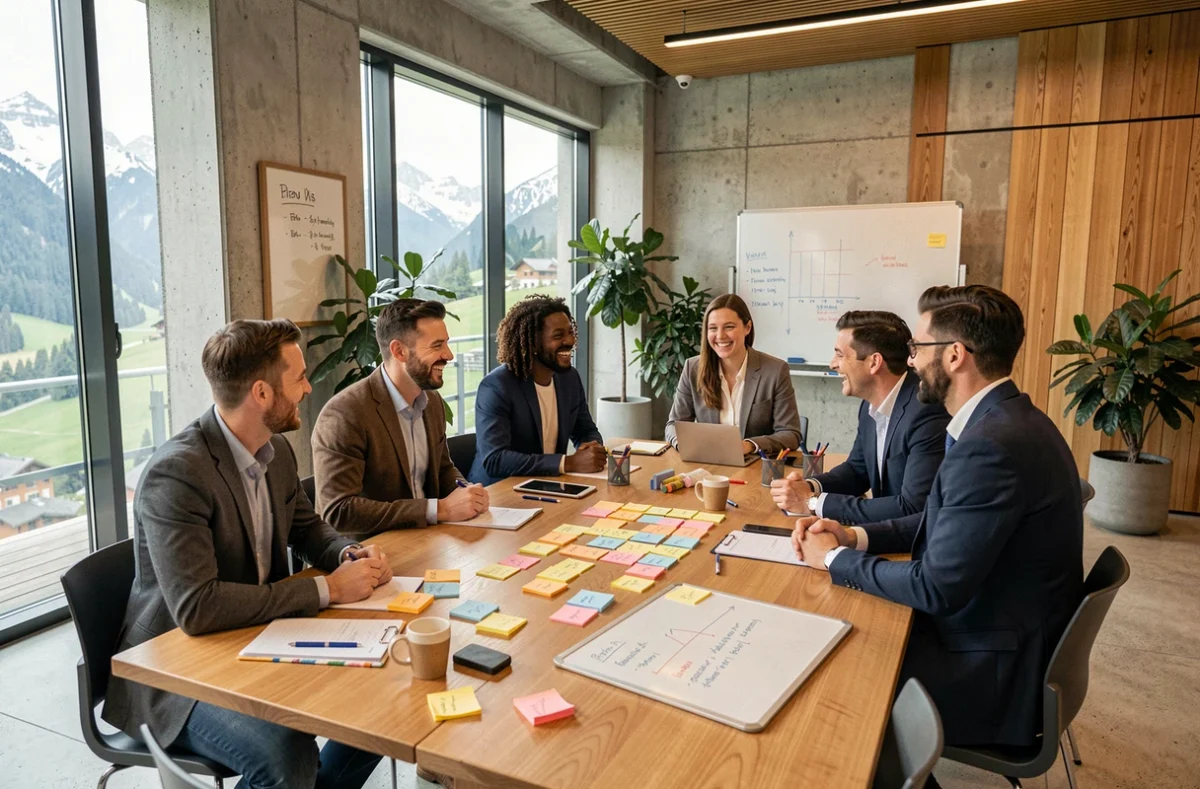
Team cohesion games aim to create interactions among people who do not collaborate daily. Culinary workshops, creative challenges, or urban rallies in Geneva or Zurich fall into this category. Their mechanics rely on mixed groups and short challenges that force communication.
Structured competition games (Olympics, sports challenges, interactive walls) are better suited for already cohesive teams looking for an intense moment. The risk: reinforcing existing divides if teams are formed by affinity. Mixing departments remains the basic rule.
Immersive formats (life-sized escape games, investigation scenarios) work on problem-solving under pressure. They reveal leadership and decision-making dynamics, making them interesting tools for management seminars. Several providers in French-speaking Switzerland offer such activities, and the U Games website in Switzerland notably gathers formulas designed for professional events with groups of varying sizes.
- Cohesion: prioritize collaborative workshops (cooking, video creation, graffiti) for recently formed or merged teams
- Competition: reserve sports or timed formats for groups of fewer than fifty people, where refereeing remains clear
- Immersion: adapt the difficulty to the audience; a scenario that is too complex generates frustration, not engagement
Event logistics in Switzerland: having a backup plan as standard
The resilience of the destination has become a criterion for event design in its own right. Flight cancellations, heatwaves, infrastructure failures: having an internal backup plan is no longer a precaution but a prerequisite.
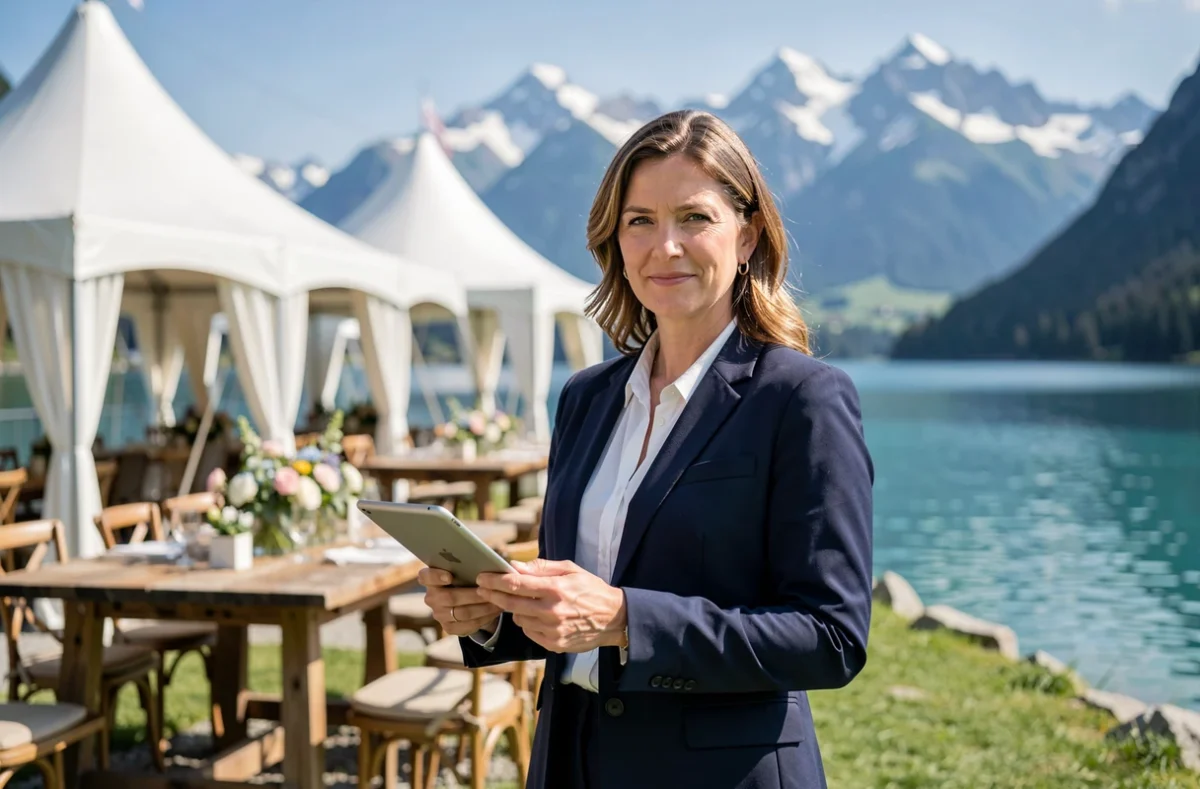
For an event by Lake Geneva in summer, this means having a covered space capable of accommodating the entire group in case of unfavorable weather. Venues that offer both outdoor space and an indoor fallback room facilitate this transition without major additional costs.
Participant transport: an underestimated aspect
Switzerland has a dense rail network, but the journey between the station and the event venue remains the weak link. A seminar thirty minutes by shuttle from a CFF station loses its appeal. Checking local transport options before confirming the venue avoids unpleasant surprises on the day.
For groups spread across multiple cities (Zurich, Geneva, Lausanne), choosing a centrally accessible location reduces overall travel time. This criterion weighs even more as the integration of carbon costs into event budgets becomes widespread.
Corporate seminar in French-speaking Switzerland: calibrating the duration
A half-day format is rarely sufficient for a meaningful fun activity. Setup, briefing, and debriefing easily consume an hour. A time slot of four to five hours allows for a complete cycle: welcome, game, break, debrief.
Full-day events benefit from alternating rhythms. A morning of work followed by an afternoon of fun works better than an entire day of games, which can become tiresome. The ideal sequencing places physical or competitive activity at the beginning of the afternoon when the group’s energy is still available.
Debriefing after the event: do not skip this step
Many organizers invest in the activity and neglect the debriefing. A structured speaking time of twenty to thirty minutes after the activity allows participants to articulate what they observed about the group’s functioning. Without this moment, the event remains a pleasant entertainment but lacks professional grounding.
The most effective format: each subgroup identifies a concrete learning point and shares it in plenary. Three sentences per team are sufficient. The facilitator reformulates and connects it to the company’s challenges.
The success of a fun corporate event in Switzerland relies less on the spectacular nature of the activity and more on the rigor of its preparation. An accessible venue, a format suited to the group size, honest communication about the environmental footprint, and a structured debriefing transform a team outing into a measurable cohesion lever.