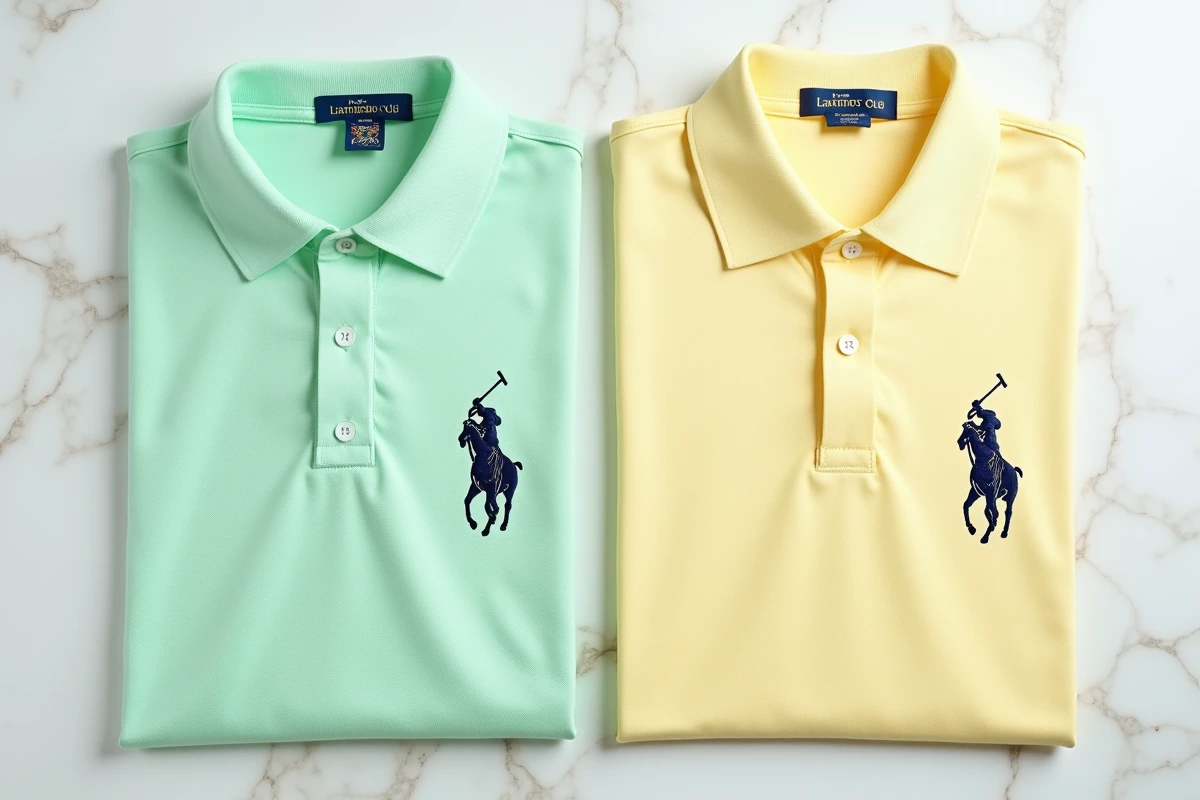
You often come across the same scenario online: an embroidered polo featuring a rider priced at under 40 euros, right next to a Polo Ralph Lauren sold for three to four times more. The label mentions “Polo Club,” the logo looks similar, and doubt creeps in. Polo Club and Ralph Lauren share a visual universe, but their origins, manufacturing processes, and level of finishing have little in common.
Disputes over the word “Polo”: what the Ralph Lauren brand really protects
Ralph Lauren actively defends the use of the term “Polo” and the embroidered rider in the fashion industry. Several recent legal actions have forced independent brands using “Polo Club” in their name to add a geographical specification or modify their logo to avoid confusion. Beverly Hills Polo Club, Royal County of Berkshire Polo Club: these brands have had to adapt their visual identity after disputes.
This legal pressure explains why Polo Club has no capital or creative links with Ralph Lauren. We are talking about two distinct entities, not two lines from the same group. The embroidered rider differs in posture, stroke, and size, but on a smartphone screen, the nuance easily goes unnoticed.
Understanding the difference between Polo Club and Ralph Lauren helps avoid paying a premium price for a brand that does not belong to that category, or conversely, missing out on a good value at Polo Club thinking it is a counterfeit.
Polo Ralph Lauren and its sub-lines: identifying the quality level on the label
Ralph Lauren is not limited to a single line. The American group, founded in 1967, has built a stacked brand system that ranges from accessible premium to pure luxury. When you buy “Ralph Lauren,” the outcome entirely depends on the sub-line.
- Polo Ralph Lauren is the commercial core of the brand: cotton polos, oxford shirts, chinos. It is the most widespread line in department stores and outlets, with average to high prices depending on the distribution channel.
- Purple Label represents the top of the pyramid, with noble materials (cashmere, Super 150’s wool) and European manufacturing on certain pieces. Prices approach Italian luxury.
- RRL (Double RL) targets a high-end workwear segment, with denim woven in Japan and artisanal finishes. It is the group’s most cutting-edge line in terms of textile sourcing.
A common pitfall, in outlets or on resale platforms, is confusing a Polo Ralph Lauren polo made for the discount circuit (less dense knit, simplified cut) with a product from the main line sold in stores. The inner label always mentions the sub-line, and that is the first reflex to have before assessing the price.
Polo Club: price positioning and actual textile quality
Polo Club operates on a very different model. The brand targets an accessible segment, with distribution primarily online and in multi-brand stores. No standalone shops in major capitals, no runway shows, no haute couture line.
In terms of textiles, standard cottons, classic cuts, and a decent level of finishing for the price range are found. Feedback varies on this point: some buyers find the wash durability satisfactory, while others note shrinkage or pilling after a few cycles. This type of variation also exists in entry-level Polo Ralph Lauren products, which adds to the confusion.
Polo Club does not claim to compete with luxury. Its commercial argument is based on “polo lifestyle” style at a low price. The embroidered rider, pastel colors, sportswear cuts: the aesthetic borrows from the same visual register as Ralph Lauren, without the support of a brand heritage built over six decades.
What the finishing reveals to the naked eye
When placing a Polo Club polo and a Polo Ralph Lauren polo from the main line side by side, three details stand out. The buttons differ: mother-of-pearl or mother-of-pearl imitation at Ralph Lauren, simple plastic at Polo Club. The rider’s embroidery is more detailed and denser at Ralph Lauren. The topstitching at the collar and armholes shows more consistent workmanship on the Ralph Lauren product.
These details do not always justify the price difference, especially when comparing with a Ralph Lauren product bought in an outlet. But they allow for quick identification of the piece’s origin in case of doubt in a second-hand market.

Choosing between Polo Club and Ralph Lauren based on actual use
The choice between these two brands depends less on taste than on the context of use. For a polo worn in daily rotation at the office or on vacation, Polo Club meets the requirements without straining the budget. The style remains understated, the colors are varied, and replacement in case of wear does not pose a financial issue.
For a more durable wardrobe or a gift, Polo Ralph Lauren offers better longevity and a recognized brand image. Resale on the second-hand market also works significantly better: a Ralph Lauren polo in good condition retains some of its value, whereas a Polo Club has virtually no secondary market.
In the high-end segment, Purple Label and RRL cater to buyers looking for textile quality close to Italian or Japanese craftsmanship, with an American DNA. We completely move out of Polo Club’s territory at this level.
The most reliable reflex remains to read the inner label, check the sub-line at Ralph Lauren, and never rely solely on the embroidered rider on the chest. Two logos that look similar from three meters away can represent considerable differences in manufacturing, price, and durability.