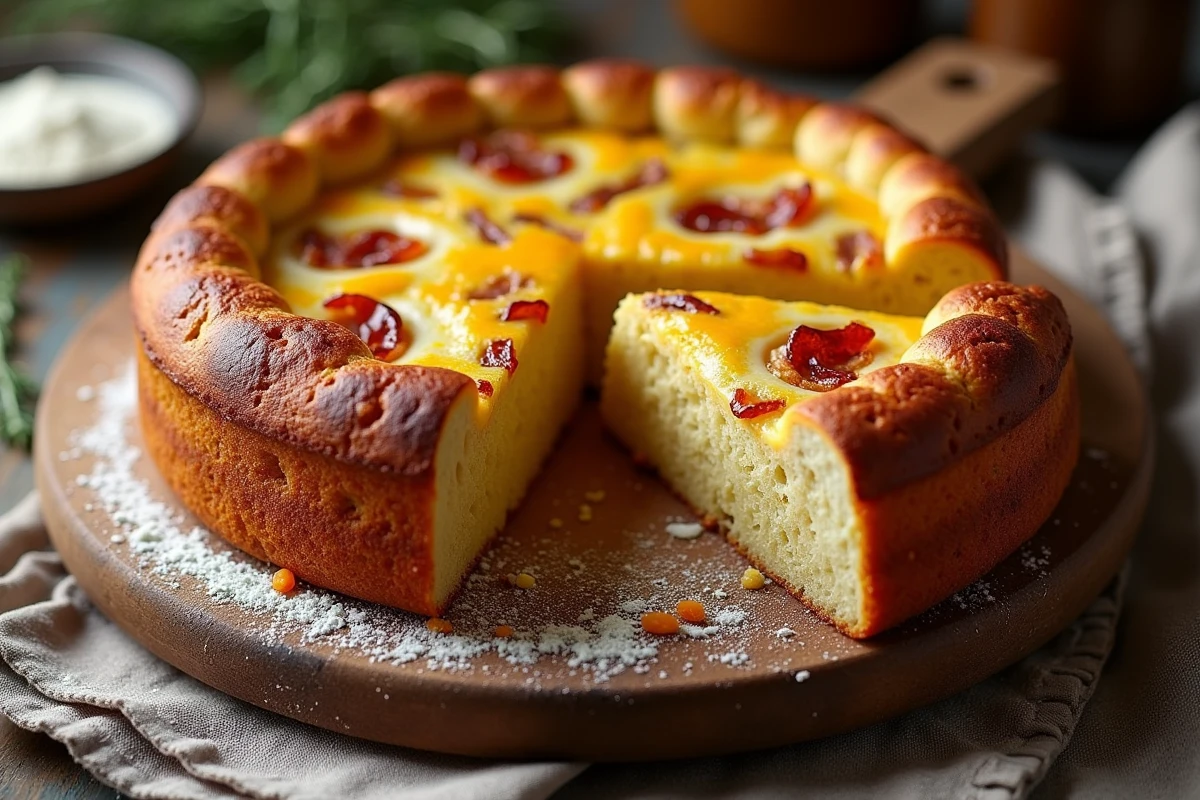
The bacon and Gruyère cake is one of those recipes that everyone thinks they have mastered. The base seems simple: flour, eggs, fat, filling. However, the result often swings between a cake that is too dry and crumbles and a compact block soaked in fat. The difference between a decent savory cake and a truly moist one lies in a few technical gestures that the ingredient list alone does not reveal.
Blanching and then sautéing the bacon: the technique that changes the cake’s texture
Most recipes simply ask to sauté the bacon in a pan before incorporating it into the batter. This approach poses a concrete problem: the bacon releases its fat directly into the crumb during baking, creating greasy pockets. These areas become dry and brittle once the cake cools.
The method that yields the best results involves blanching the bacon for a few minutes in boiling water, then sautéing it dry in a hot pan. Blanching removes excess salt and a good portion of the surface fat. The subsequent dry sautéing adds crispiness and a grilled flavor without reintroducing fat.
As detailed by 750g for a bacon-goat cheese cake, this double cooking method is directly translatable to the bacon Gruyère cake. It prevents the greasy “holes” that dry out the crumb during reheating.
By consulting cooking tips on Trop Facile, you can find this same principle of pre-treating the bacon before incorporation, with variations depending on the chosen filling.

Yogurt and fermented milk in a savory cake: why acidity makes the crumb more tender
Classic bacon Gruyère cake recipes rely on whole milk or melted butter for the liquid component. The result is often acceptable, but the crumb lacks that airy and slightly moist texture that distinguishes a moist cake from a merely acceptable one.
Replacing part of the milk with plain yogurt or fermented milk like buttermilk significantly transforms the texture. The acidity of these fermented dairy products acts on the gluten network by relaxing it, resulting in a softer crumb. It also reacts with baking powder to enhance the gas rise. Cuisine AZ suggests this substitution to lighten the cake while maintaining its melt-in-the-mouth quality.
Specifically, replacing half of the milk with plain stirred yogurt works well. Greek yogurt, which is thicker, also works but requires adjusting the amount of flour to avoid weighing down the batter. Fermented milk (lait ribot) yields the airiest result, as its liquid consistency incorporates easily without altering the proportions.
What the choice of fat really changes
Olive oil or sunflower oil produces a moister cake than melted butter because they remain liquid at room temperature. A cake made with oil retains its softness even the next day, while a butter cake firms up as it cools. For a bacon Gruyère cake intended for an appetizer or picnic, oil is the most logical choice.
Grated Gruyère in a cake: weight, grater size, and timing of incorporation
Gruyère plays more than just a flavor role in the cake. Its fat and protein content directly modify the structure of the crumb. Too much cheese makes the cake compact and sticky in the center. Not enough, and the flavor disappears behind the bacon.
- Grating the Gruyère into thick slices (coarse grater) rather than fine powder allows for visible melting strands when sliced, without the cheese completely dissolving into the batter.
- Incorporating two-thirds of the Gruyère into the batter and reserving the last third for the top of the cake before baking creates a golden, gratin-like crust that contrasts with the moist crumb.
- Mixing the grated Gruyère with the flour before adding the liquids prevents the cheese pieces from sinking to the bottom of the mold during baking. The flour coating slows down the migration downward.
The choice between French Gruyère and Swiss Gruyère (which has holes) is not trivial. French Gruyère, with a denser texture, melts more evenly. Swiss Gruyère provides a fruitier flavor but melts less consistently. Both work, but the mouthfeel differs.
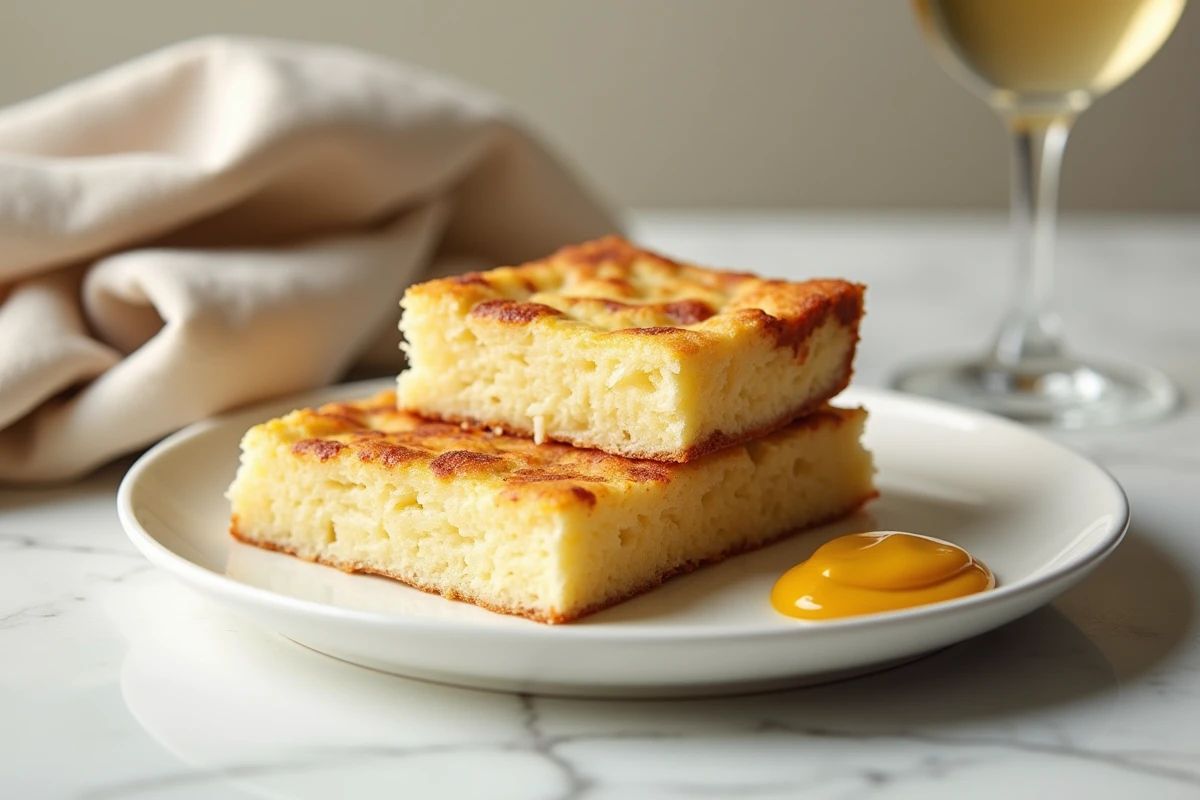
Baking the bacon Gruyère cake: temperature and knife test
A savory cake does not bake exactly like a sweet cake. The presence of cheese and bacon, rich in fats, accelerates the browning of the exterior. If the oven is too hot, the crust forms before the center is cooked, trapping moisture and resulting in a doughy heart.
Baking at a moderate temperature and slightly extending the cooking time yields a better result than a short bake at high temperature. The cake rises more evenly, the crust does not crack chaotically, and the center reaches the right texture without the edges drying out.
The trap of a mold that is too wide
A classic cake mold (rectangular, high sides) concentrates the batter in thickness, which promotes a moist center. A mold that is too wide spreads the batter into a thin layer that cooks quickly and dries out. Filling the mold two-thirds full allows the cake to rise without overflowing, while keeping enough thickness to retain moisture in the center.
The knife test remains the only reliable indicator. The knife should come out with a few moist crumbs stuck to it, not dry like for a sweet cake. A savory cake that is slightly undercooked in the center will finish stabilizing during cooling in the mold, preserving its moistness when sliced.
Letting the cake cool for about ten minutes in its mold before unmolding prevents it from breaking. The structure needs this time to firm up just enough. Slicing a bacon Gruyère cake while still hot is the best way to end up with collapsing pieces, no matter how careful you were with the recipe.