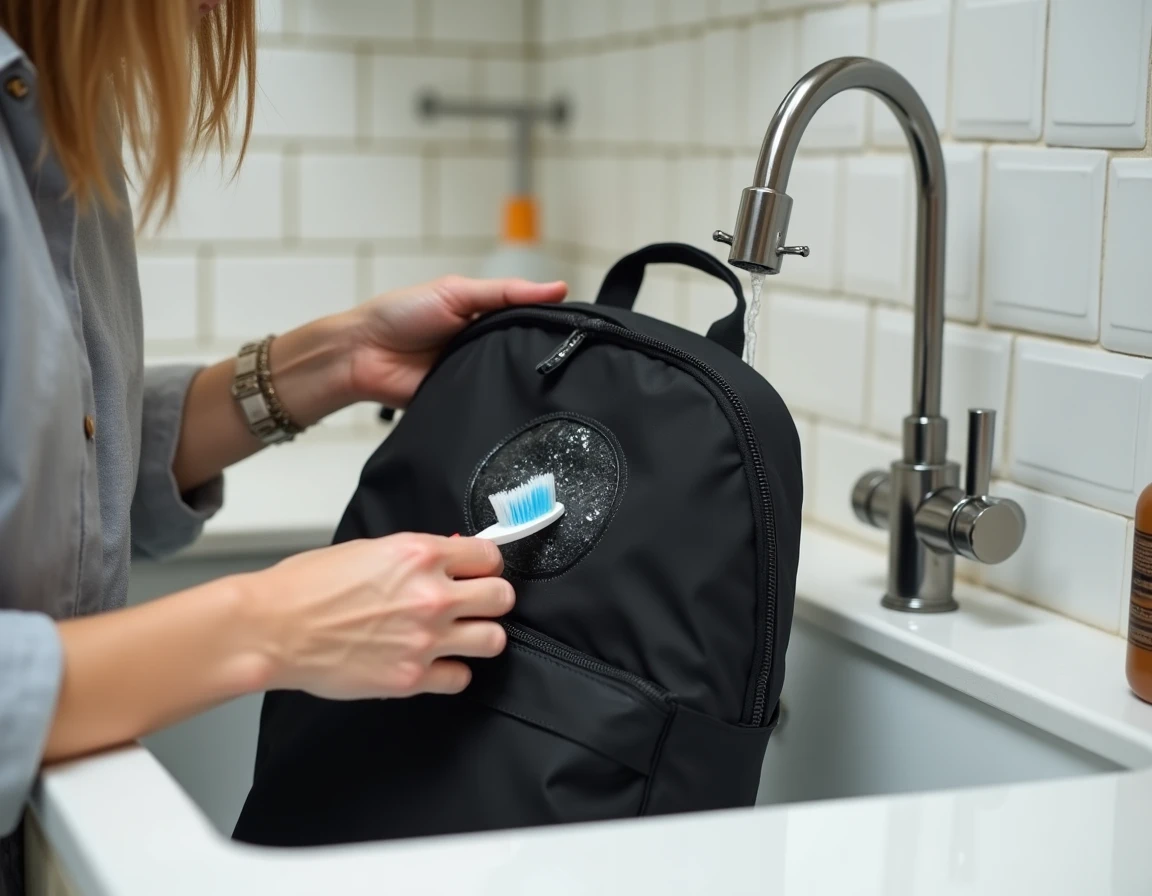
A Kipling backpack stained with ballpoint ink at the bottom of a pocket, a crushed fruit puree in the main compartment, gray marks on the flap after a full school year: we all know that moment when the bag needs a serious cleaning. The Kipling nylon has a water-repellent treatment that does not forgive washing mistakes.
Scrubbing too hard or choosing the wrong product damages the surface much faster than you can remove the stain.
The Kipling water-repellent treatment: why it changes the entire cleaning method
Most Kipling backpacks are made of nylon coated with a water-repellent treatment that repels water on the surface. This coating protects the fabric on a daily basis, but it has a flaw: it wears off with each aggressive wash. A powerful detergent, water that is too hot, or a machine wash is enough to gradually degrade this protection.
Kipling specifies on its own maintenance page: do not put the backpack in the machine, even on a delicate cycle. The drum, prolonged immersion, and spinning can deform the internal structure of the bag and remove the surface treatment. Therefore, we adopt an approach based on the method for cleaning a backpack locally rather than a full wash.
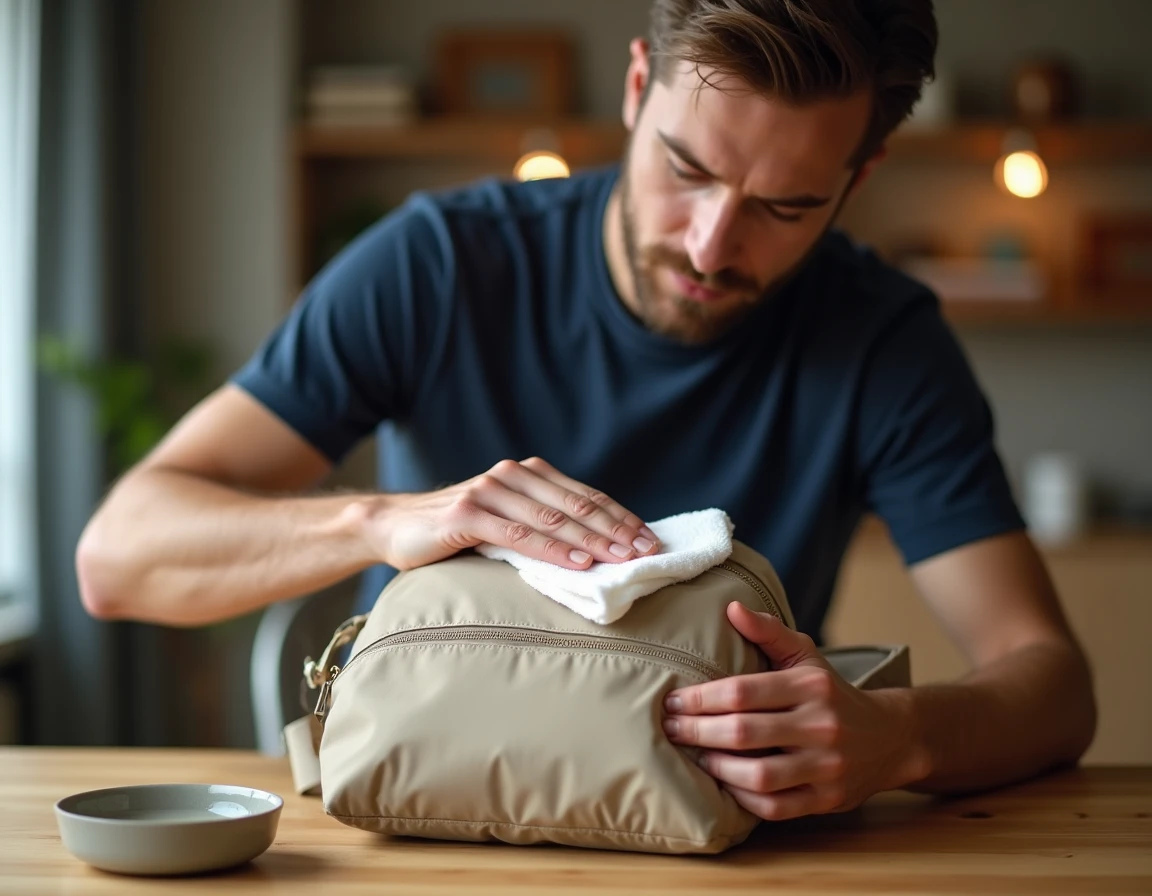
In practical terms, this means that we never wash the entire bag unless absolutely necessary. We target the dirty area, use a neutral soap diluted in lukewarm water, and dab with a soft cloth. This localized cleaning reflex extends the life of the fabric and keeps the water-repellent appearance much longer.
Ballpoint ink stain on Kipling backpack: the most common case
Ballpoint ink stains are a recurring nightmare for parents. The problem with ballpoint ink is that it quickly penetrates the nylon fibers. Waiting until the weekend to deal with it means letting the pigment set.
Act within the first few minutes
Take a clean cloth (a piece of white fabric, no colored cotton that could bleed) and dab the stain without rubbing. Rubbing spreads the ink instead of absorbing it. Lightly moisten the cloth with lukewarm water and a drop of neutral soap, like liquid Marseille soap.
If the stain persists, you can use a bit of 70° alcohol on a cotton ball, dabbing gently. Feedback varies on this point depending on the color of the fabric: on a dark backpack, alcohol works without issue, but on a light color, first test it on a hidden area (under the flap or inside a pocket).
What to absolutely avoid
- Acetone or nail polish remover, which attack the water-repellent coating and can discolor the nylon
- Industrial stain removers like universal sprays, often too aggressive for technical textiles
- Energetic brushing with a hard brush, which creates visible micro-scratches on the fabric
Complete cleaning of the Kipling backpack at the end of the school year
When the backpack has accumulated months of dust, crumbs, and diffuse marks, simple spot cleaning is no longer sufficient. We then proceed to a thorough cleaning, but always by hand.
Concrete steps to wash a Kipling backpack without a machine
Completely empty the bag and turn the pockets inside out to shake out any residues. Use a low-power vacuum cleaner in the compartments to remove embedded dust and crumbs. This is a step that many skip, but it prevents turning dry dirt into mud when it comes into contact with water.
Next, prepare a basin of lukewarm water (never hot) with a small amount of neutral soap. Soak a soft cloth in this solution, wring it out well, and scrub the outside of the backpack in sections. Focus on the contact areas (the back, straps, bottom) that accumulate sweat and friction.
For the inside, use the same wrung-out cloth. Avoid saturating the fabric with water: the goal is to moisten the surface, not to soak the backpack. Excess water takes days to dry completely and can generate musty odors.
Drying, the stage where the backpack can deform
Dry in the open air, away from any direct heat source. No radiators, no tumble dryers, no prolonged direct sunlight. Heat deforms the back padding, cracks synthetic elements (buckles, zippers), and accelerates fabric discoloration.
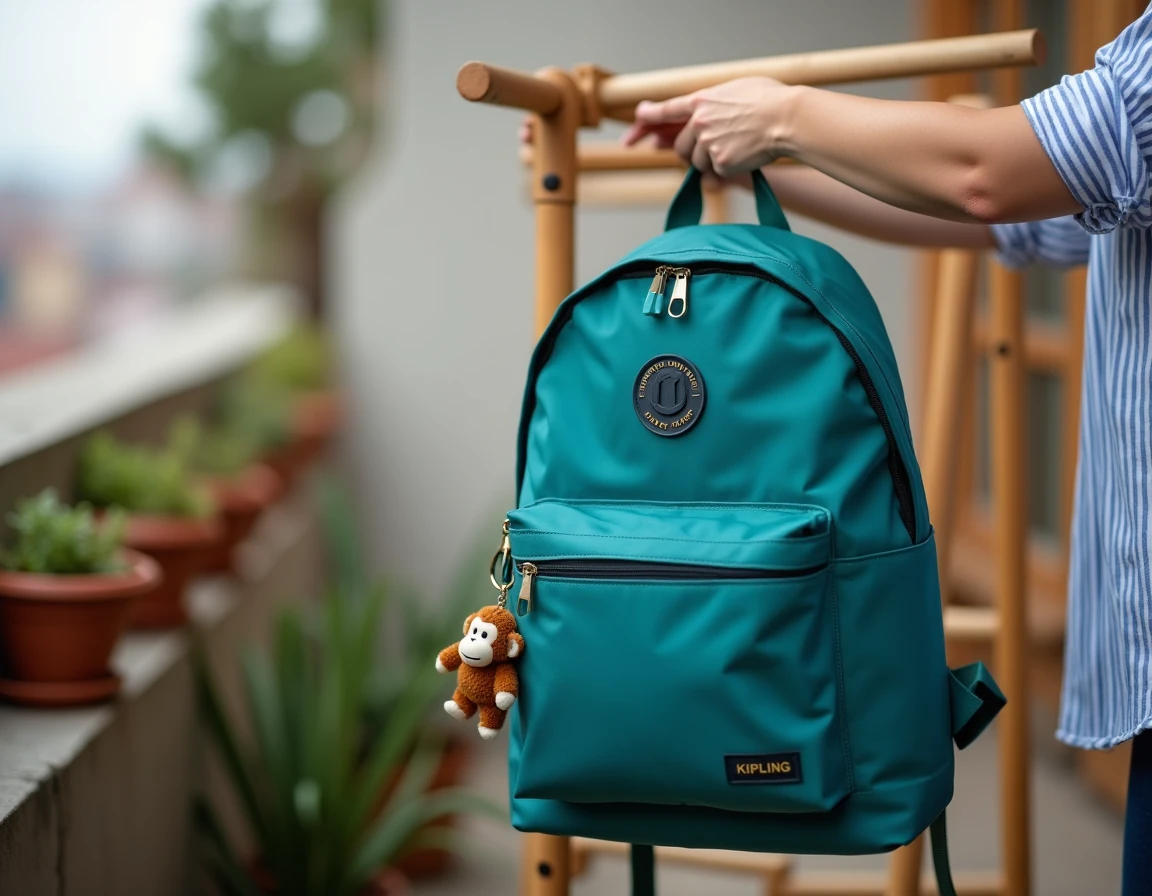
Open all pockets and place the backpack flat or hang it by the handles in a ventilated room. A nearby fan speeds up the process without risk. Allow at least a full night of drying before reusing it.
Regular maintenance of the Kipling backpack: actions that prevent major cleaning
The best cleaning is the one you don’t have to do. A few simple habits, applied each week, significantly reduce dirt accumulation.
- Empty the backpack every Friday evening and shake the compartments to eliminate crumbs and dust
- Wipe the bottom and interior walls with a damp cloth once a month
- Treat each stain as soon as it appears with a cloth and neutral soap, without waiting
- Store the backpack open during vacations to ventilate the interior and avoid musty odors
These actions may seem trivial, but they make the difference between a Kipling backpack that lasts two years and one that needs to be replaced at the next school year. Quality nylon withstands mechanical wear well; it is the accumulation of dirt and poorly adapted washes that shortens its lifespan.
One last often-overlooked point: the Kipling monkey keychain, if it is plush, should be cleaned separately. Detach it, wash it by hand with a bit of mild soap, and let it dry flat. Putting it back on the backpack while still damp creates exactly the type of local humidity that encourages mold in the fibers of the bag.